
Types of Water Softeners: How to Choose (2026 Guide)
Every water softener type explained, metered, cabinet, twin-tank, salt-free, portable, with real price bands and the decision path that actually fits.
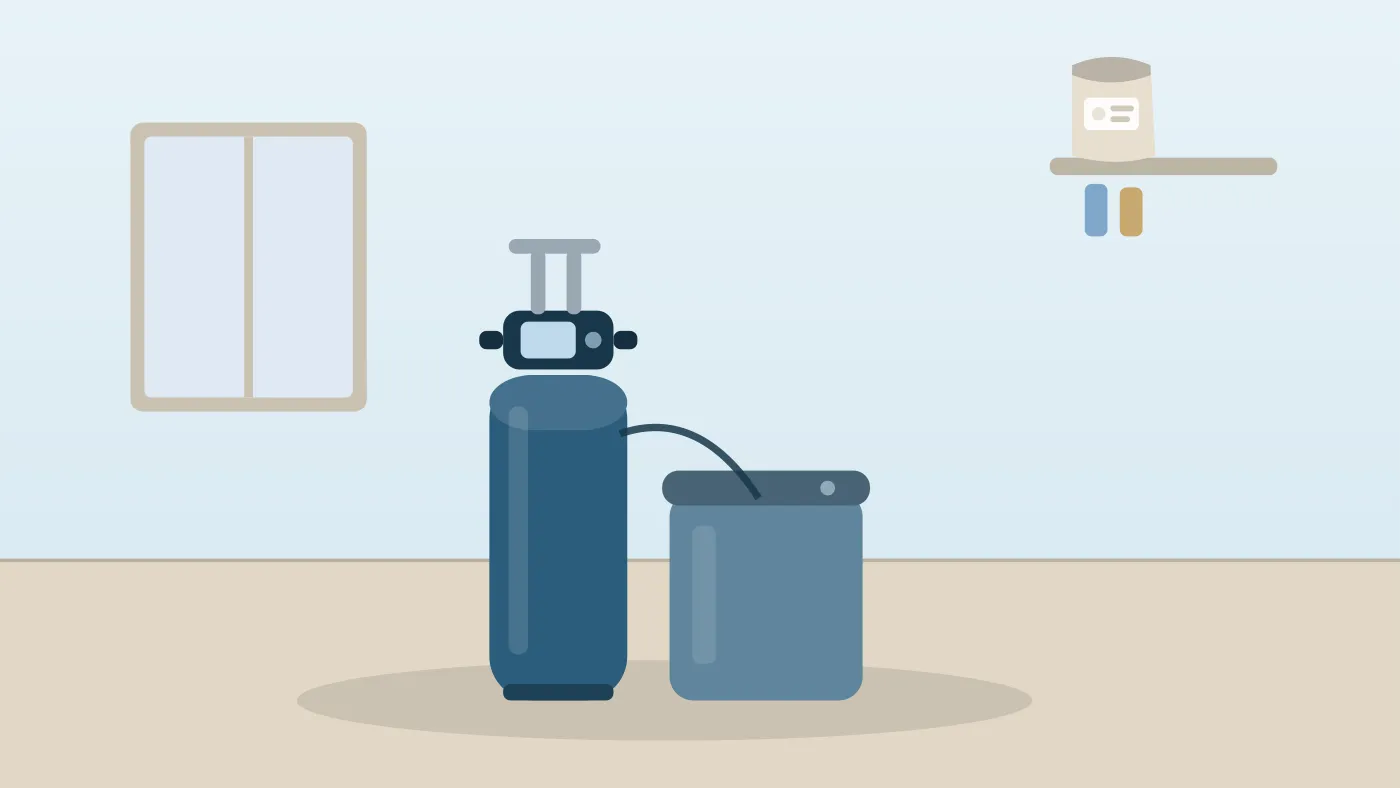
Every water softener sold in the US is a variation on five designs, and picking between them is a two-question decision: how hard is your water, and where will the system live? This hub walks each type with honest price bands, then routes you to the deep-dive that matches your situation.
What are the main types of water softeners?
| Type | What it is | Price band (equipment) | Best for |
|---|---|---|---|
| Metered two-tank | Separate resin + brine tanks; regenerates on measured use | $400–$1,500 | Most homes, best running cost |
| Timer-based | Regenerates on a clock whether needed or not | $300–$700 | Cheap up front, wasteful long-term |
| Cabinet (all-in-one) | Resin inside the salt cabinet; big-box standard | $400–$800 | Tight utility closets |
| Twin-tank | Two resin tanks alternate; soft water even during regeneration | $1,500–$3,000+ | Large families, 24/7 demand, very hard water |
| Salt-free conditioner (TAC) | Crystallizes hardness so it won’t stick; removes nothing | $500–$2,500 | Scale control where salt is banned or unwanted |
| Portable | 8,000–16,000 grain tank, regenerated manually with table salt | $150–$350 | RVs, boats, rentals |
Electronic “descalers” that clip magnets or coils around a pipe sell in the same aisle, but they belong in a different conversation, our electronic descaler review covers why the evidence is thin.
How does a water softener actually work?
Ion exchange: hard water passes through a bed of resin beads charged with sodium, the beads trade their sodium for the water’s calcium and magnesium, and the water leaves genuinely soft. When the resin fills up with hardness minerals, the system flushes it with brine from the salt tank and starts over, that’s regeneration. The full chemistry, including what the salt does and doesn’t end up in your glass, is in how water softeners work.
The design differences above are really just answers to one engineering question: when and how should regeneration happen?
Metered vs timer: why regeneration control decides your salt bill
A metered (demand-initiated) valve counts actual gallons and regenerates only when the resin is nearly spent. A timer valve regenerates every few nights regardless, vacation weeks included. On identical water, the timer unit can burn 30–50% more salt and water per year. The price gap at checkout is often under $150; the difference in lifetime running cost is several times that. Our regeneration settings guide shows the numbers per setting.
Which type fits which household?
A 1–2 person condo on moderately hard city water gets away with a small cabinet unit or even no softener, run a hardness test before spending anything.
A 3–5 person house on 7–15 GPG water is the core case for a metered two-tank system in the 32,000–48,000 grain range. This is where value builds like the Fleck 5600SXT-based packages earn their reputation, around $785 for a 48k build with a 5-year valve warranty.
Big households, very hard water (15+ GPG), or anyone who can’t tolerate hard-water gaps should price a twin-tank. One tank serves while the other regenerates, so there’s no 2 a.m. soft-water outage and the resin can regenerate with fully soft water, which extends its life.
Well water changes the rules entirely, iron, manganese, and sulfur decide the system before hardness does. Start at softeners for well water and, if you smell sulfur, the rotten-egg water guide.
Businesses and large buildings size differently and pay differently, see commercial water softeners.
What size do you need?
Multiply people × 75 gallons × your hardness in GPG, that’s your daily grain load, and the right capacity handles about a week of it with 25% in reserve. A family of four on 10 GPG water lands on 48,000 grains. Don’t buy the nameplate number blindly: “48k” assumes a maximum salt dose nobody should run. The sizing guide walks the math, or the sizing calculator does it for you in seconds.
Salt-based or salt-free?
If you want soft water, the slick-shower, no-spots, half-the-detergent experience, only ion exchange delivers it. If you only want to stop scale from shortening your water heater’s life, and especially if your city restricts brine discharge (parts of California, Texas, and Arizona do), a TAC conditioner is a legitimate answer at zero salt cost. The honest comparison, including what TAC can’t do, is in the salt-free guide and the conditioner vs softener breakdown.
What will it cost: really?
Equipment is half the story. A $600 softener with efficient regeneration costs less over ten years than a $400 unit that eats salt. Budget for: equipment ($400–$1,500 for most homes), installation ($200–$800 professionally, itemized here), and salt ($60–$180/year, salt guide). The complete math, including dealer-brand quotes and rental economics, is in the cost guide.
Who should NOT buy a water softener?
- Hardness under 3.5 GPG. The payback isn’t there; treat symptoms directly.
- Homes under brine-discharge bans, go salt-free or check local variances first.
- Renters on a 1-year lease, a portable unit or nothing; leave plumbing to the landlord.
- Anyone whose real complaint is taste or smell. Softening doesn’t fix chlorine taste or sulfur smell, those are filtration problems.
Where to go next
Ready to shortlist: best water softeners with efficiency data and the high-efficiency tier. Buying big-box vs online: Costco vs Home Depot vs online. Comparing dealer brands: Culligan review, Kinetico review, and the full brand map. Already own one? The maintenance schedule protects the investment, and benefits, measured is the page to send a skeptical spouse.
Frequently asked questions
Quick answers to what buyers ask us most
What type of water softener is best for a family home?
A metered two-tank ion-exchange system is the default answer for a 2–6 person house: it regenerates on actual water use, runs $400–$1,500 in equipment, and its resin typically lasts 10–15 years. Cabinet units trade some efficiency and resin life for a smaller footprint. See our ranked picks.
Do I need a softener if I'm on city water?
City water is treated for safety, not for hardness, many municipal supplies run 7–15 GPG, which is firmly hard. Check your city's water-quality report for hardness or use a $10 test kit. Under about 3.5 GPG, a softener rarely pays for itself.
Are salt-free water softeners really softeners?
No, they're conditioners. TAC (template-assisted crystallization) systems reduce scale buildup but leave hardness minerals in the water, so it still tests hard and soap behaves the same. They're the right call where brine discharge is banned or you only care about scale. Full breakdown in the salt-free guide.
How long do water softeners last?
Quality two-tank systems run 10–15 years; the control valve usually fails before the tanks. Cabinet units average shorter lives because heat from the electronics sits next to the brine. Iron-heavy well water shortens resin life significantly, see the well water rules.